
Small Space Interior Design Ideas That Actually Work
If you’ve stood in the middle of a small apartment thinking there has to be a better way — that feeling is worth listening to. It usually means the space is working against you, not with you.
The fix isn’t always more storage or lighter colors. Most of the time it’s the layout.
Start with how you move, not what you buy
Most people buy furniture first, then figure out where it goes. That’s backwards.
Before anything else, watch how you actually use the space for a few days. Where does clutter collect? Which corner gets morning light? Where do you instinctively avoid? Once you know how the space behaves, you can work with those patterns instead of against them.
For a small living room, this often means pulling furniture slightly away from the walls — counterintuitive, but it creates depth — and anchoring seating around one focal point rather than spreading it evenly around the perimeter.
Walls are doing nothing in most homes
The floor plan is fixed. The walls aren’t.
Floor-to-ceiling shelving turns dead vertical space into storage and display without touching the floor area. Built-in cabinetry along one wall can replace a wardrobe, a bookshelf, and two side tables in one go — and the room feels calmer for it. A client in Karachi swapped three bulky pieces of furniture for a single built-in wall unit. The difference was immediate.
It’s one of the least-used moves in apartment interiors here, which makes it one of the most noticeable when done well.
Multifunctional furniture — but only the good kind
There’s a version of this that feels like compromise: a sofa bed uncomfortable as both, a fold-out desk that wobbles. That’s not what works.
Good multifunctional furniture is designed from the start to do two things properly. A dining table with real storage underneath. A daybed with deep drawers. A home office desk that folds flat against the wall and actually disappears. The difference between these and the cheap version is usually visible in the hardware and the tolerances — it’s worth examining before buying.
Light
Natural light does more for a small space than almost anything else. If you’re working with limited windows, don’t compensate with heavy curtains and bright overhead fixtures. Use light walls, reflective surfaces, and a mirror placed directly across from a window — it bounces the outdoor view back into the room and genuinely changes how big the space reads.
For a home office, task lighting beats general brightness. A well-lit desk in a softly lit room feels focused. A uniformly bright room just feels like a room.
Zones without walls
Open-plan layouts create a specific problem in small spaces: everything bleeds together. Living area into dining area into workspace — and suddenly nothing feels like it’s for anything.
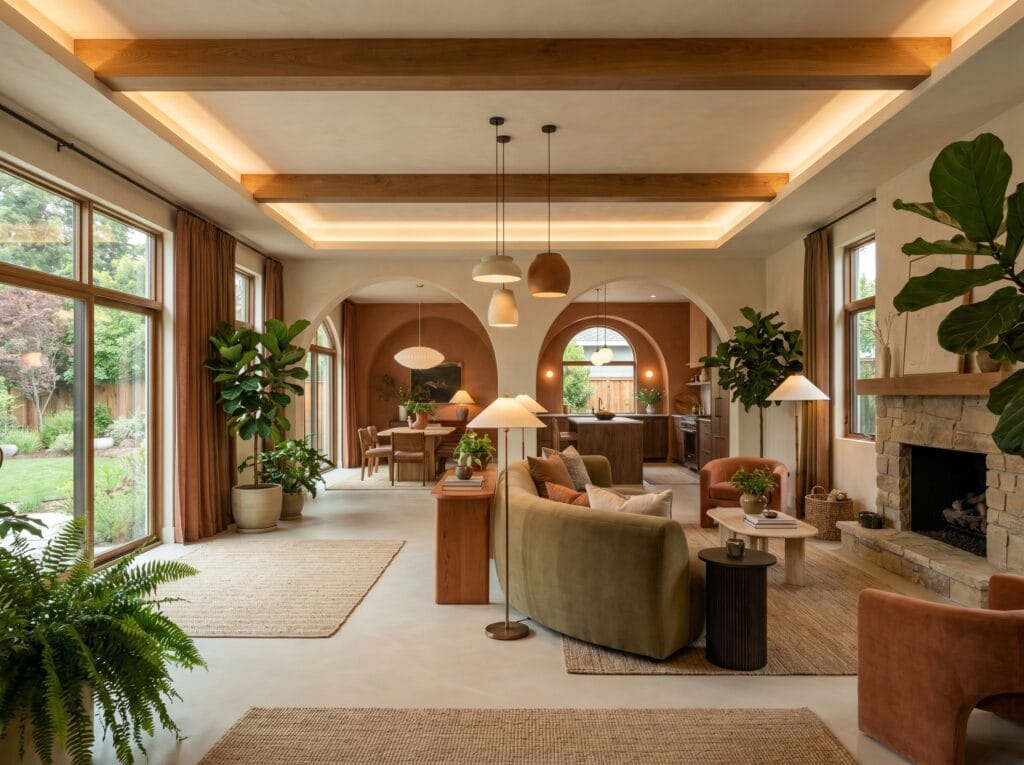
The solution isn’t partitions. A rug under the sofa defines the lounge. A pendant above a small dining table claims that corner. A slightly different paint tone on one wall carves out a workspace without closing it off. These decisions don’t cost much. They’re just not obvious until you’ve seen them work.
Color: safe works, but specific is better
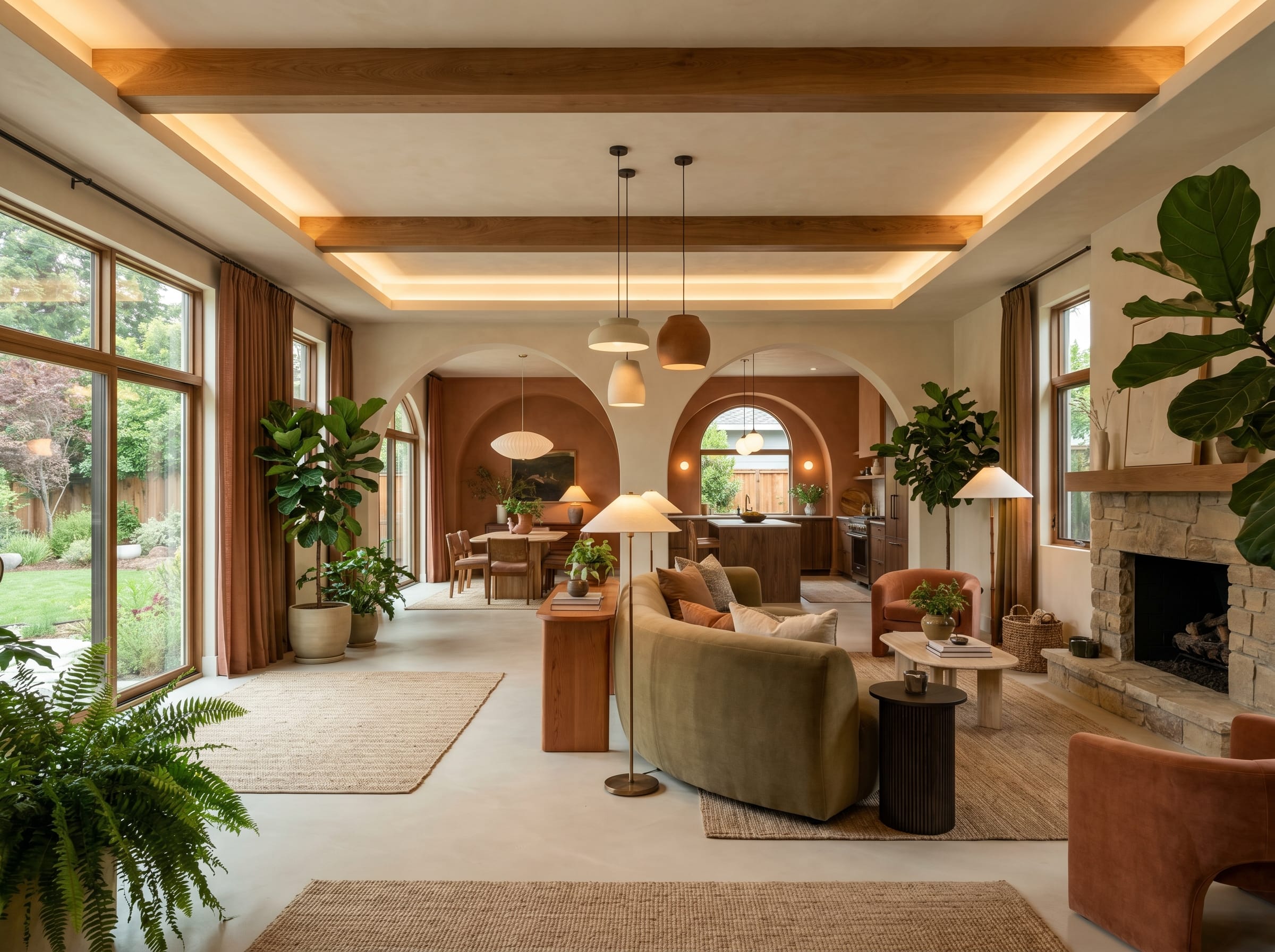
White and beige are fine. But a single area of strong color — a deep wall, a richly stained joinery piece, one chair in a real hue — pulls the eye to a point and stops the room from reading as uniformly small. Layering textures (plaster, wood, woven fabric) does the same thing: a room with varied materials reads as larger than the same room in a single finish, even at identical square footage.
When to bring in a designer
Cushion colors, shelf placement, furniture arrangement — you can handle that yourself.
But if you’re planning built-in joinery, reconfiguring a layout, or trying to make 400 square feet feel genuinely livable, a professional earns back their fee in avoided mistakes. A spatial plan before you start is almost always cheaper than fixing decisions made without one.
MQ Architects works on residential and commercial interiors across Pakistan. If you have a compact space and want to see what it could actually become — mqarchitects.com
Recent Comments