
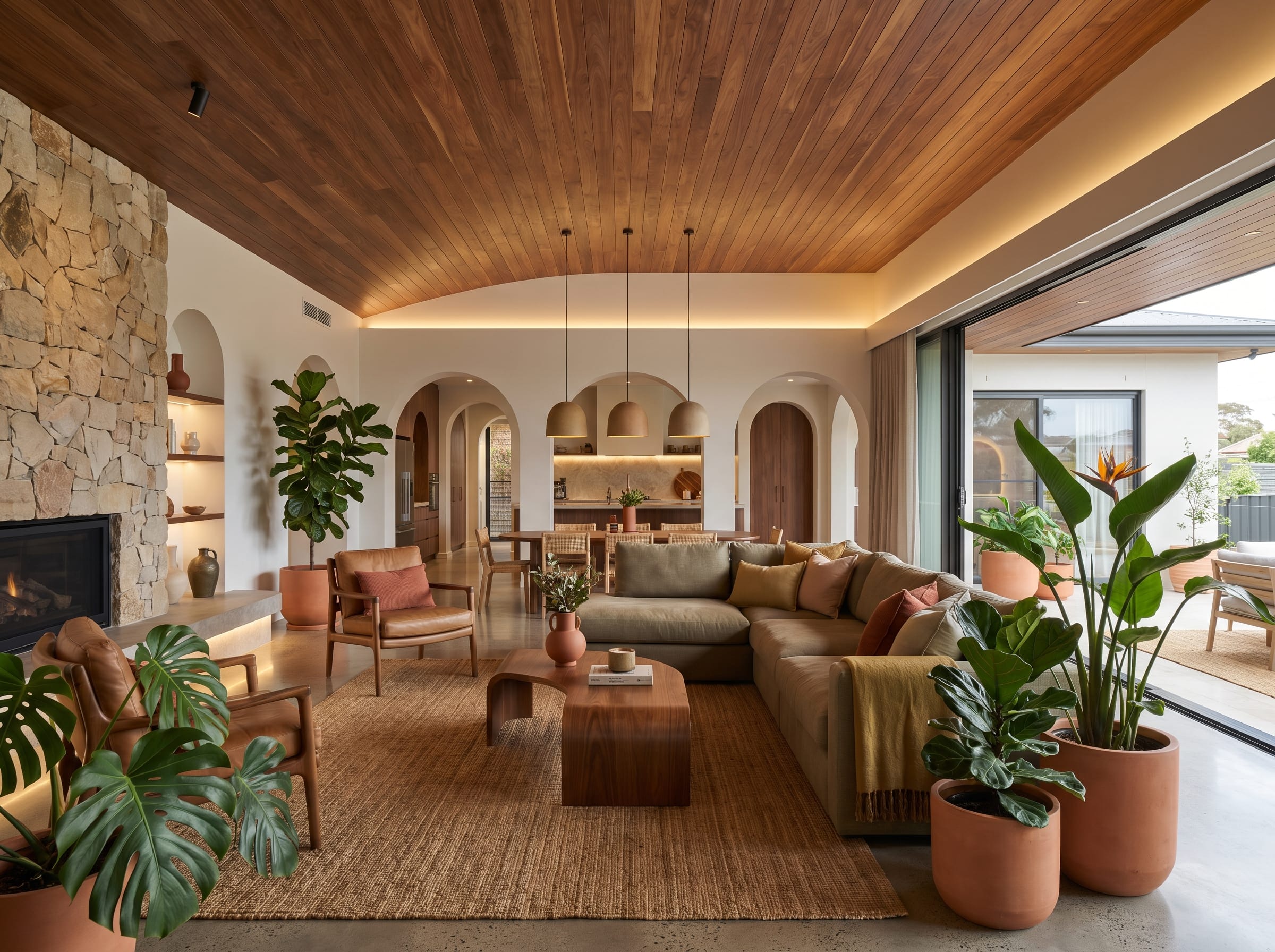
Top Interior Design Trends for Modern Homes in 2026
If you’ve been planning a home renovation or thinking about refreshing your living spaces, 2026 is a genuinely good year to do it. The direction home interiors have moved over the past two years has been deliberate — less chasing novelty, more building spaces that actually feel good to live in.
We work with homeowners across a wide range of projects at MQ Architects, from full home redesigns to focused office interior work, and the requests we’re hearing most often right now reflect a clear shift: people want homes that are calmer, more personal, and built to last. Here’s what’s actually showing up in modern interior design this year — and why it matters for your own space.
1. Warm Minimalism Is Replacing Cold Minimalism
The sterile white-box aesthetic that dominated a decade of modern home interior design has quietly been retired. What’s replacing it isn’t maximalism — it’s warmth. Think natural linen, raw timber, matte plaster walls in off-white or clay tones, and furniture with organic, slightly imperfect shapes.
The philosophy behind it is simple: a space can be uncluttered and still feel lived-in. Home interior design in 2026 is proving that restraint and comfort are not opposites.
For homeowners working with interior designers on full renovations, this trend is especially useful because it’s forgiving. Natural materials don’t demand perfection. A slightly uneven plaster wall or a handmade ceramic light fitting adds character rather than looking like a mistake.
2. The Home Office Has Become a Serious Design Priority
Remote and hybrid work hasn’t gone away — and after a few years of working from a corner of the bedroom, people are done treating office interior design as an afterthought.
A dedicated home office now carries the same design weight as a kitchen or living room. That means proper lighting (not just a desk lamp), acoustic consideration, built-in storage that doesn’t look like flat-pack furniture, and a visual identity that keeps you focused rather than distracted.
What makes a well-designed home office different from a functional one is intentionality. The best ones we’ve worked on are rooms where the architecture supports the work — natural light from the right direction, wall proportions that don’t feel cramped, materials that stay visually quiet during long hours.
If you’ve been searching for interior designers near me to help with a home office project, ask specifically about their experience with working environments. It’s a different challenge than designing a living room, and not every firm approaches it with the depth it deserves.
3. Biophilic Design Has Moved from Trend to Standard Practice
A few years ago, incorporating natural elements into home interiors felt optional — a plant here, a wood accent there. In 2026, biophilic design is less a style choice and more a baseline expectation in modern interior design.
What does that actually mean in practice? It means large operable windows positioned to frame garden views, indoor planting that’s integrated into the architecture (not just pots on a shelf), natural stone or terrazzo surfaces, and ventilation that brings real air movement into the space.
The evidence behind it is straightforward: people feel better, sleep better, and are more productive in spaces that maintain a visual and physical connection to the outdoors. Architects near me searches have spiked in cities where new apartment buildings are incorporating green walls and sky gardens — residents who live in those buildings report noticeable quality-of-life improvements.
For apartment interior design specifically, biophilic thinking has pushed designers to get creative with smaller footprints. Even a compact flat can be designed to feel connected to the outside when ceiling heights, glazing ratios, and plant placement are handled with care.
4. Arches and Curves Are Back — Thoughtfully
Arched doorways, curved furniture, and rounded cabinetry have made a strong return, and at this point they’re no longer a passing aesthetic. They show up consistently in modern home interior design because they work. Curved forms soften a room’s edges and make spaces feel more considered without requiring heavy decoration.
The key is restraint. One arched opening in a hallway makes an impression. Seven arched doorways in a single apartment starts to feel theatrical. The best contemporary interior design examples use curves as punctuation — placed deliberately, not repeated mechanically.
From an architectural standpoint, introducing arches during a renovation is most effective when it’s part of the original spatial planning, not a surface-level addition. That’s where working with a qualified architect or architectural designer pays off — the form follows the structure, rather than fighting it.
5. Multifunctional Spaces Built Around Real Life
Modern apartment interior design and home design interior are both moving toward spaces that flex around how people actually live — not how a showroom expects them to live.
This means dining areas that double as workspace. Living rooms with acoustic panels that double as art. Bedrooms with concealed storage that’s genuinely accessible. The best livspace thinking right now centers on one question: what does this household actually do all day, and how does the space support that?
It’s a different starting point than “what style do we want?” — and it tends to produce better results. When interior designers near you take the time to map out how a household functions before reaching for a mood board, the finished space tends to age well rather than feeling dated in three years.
6. Material Honesty — What You See Is What It Is
There’s been a quiet rejection of surfaces that pretend to be something they’re not. Vinyl that mimics timber. Laminate posing as marble. Printed concrete-effect tiles.
In 2026, home interior design has shifted toward using real materials where possible — or, where budget doesn’t allow, being honest about what’s synthetic rather than disguising it. Exposed concrete is used because it looks like concrete, not because it’s imitating stone. Timber veneer is used as veneer, not stretched to masquerade as solid wood.
This connects to a broader design philosophy that the best architectural designs are truthful — they don’t ask you to believe something false about the space you’re in. It’s a standard we apply at MQ Architects across both residential and office interior projects, and clients consistently respond positively once they understand the reasoning behind it.
Bringing These Trends Into Your Own Home
Not every trend belongs in every home. The ones worth paying attention to are the ones that align with how you use your space — your daily routines, your light conditions, the scale of your rooms, your budget.
If you’re planning a renovation, a new build, or a focused redesign of one room, the right starting point isn’t Pinterest. It’s a conversation with someone who can walk through your space and ask the right questions.
Our team at MQ Architects works across home interior design, office interior projects, and apartment redesigns. We bring both architectural thinking and interior design experience to every project — which means the spaces we design work well structurally and feel right to live in.
Ready to start planning your 2026 interior redesign? Get in touch with MQ Architects — we respond within 24 hours and offer an initial consultation to understand your project before anything else.
Recent Comments